
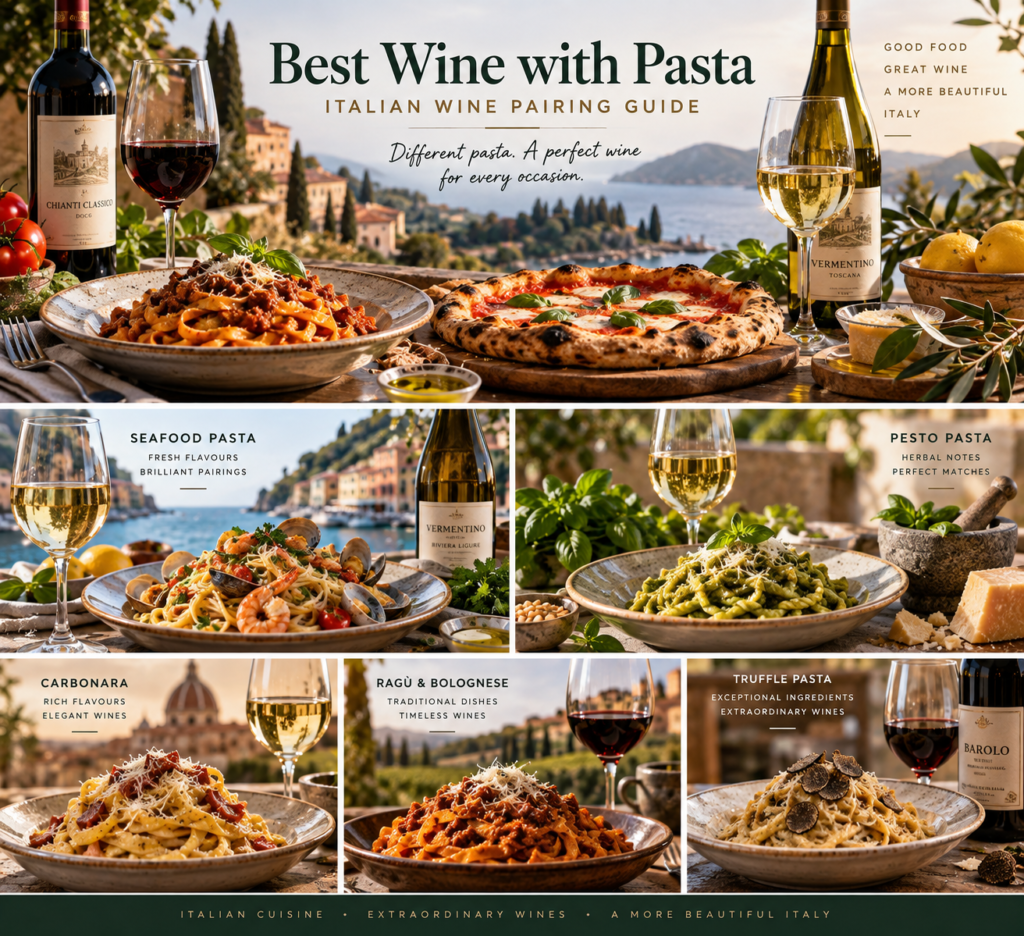
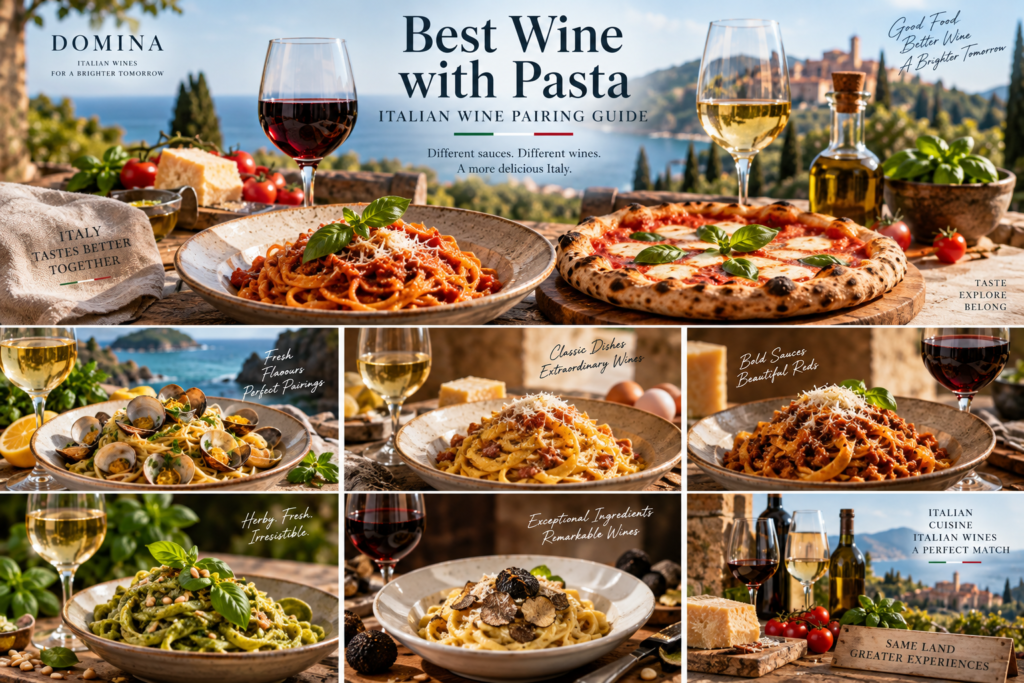
Choosing the best wine with pasta is less about the pasta shape and much more about what surrounds it.
Tomato, seafood, butter, cheese, mushrooms, pesto and slow-cooked meat all create very different pairing needs. A delicate seafood pasta can be overwhelmed by a powerful red, while a rich ragù may make a very light white wine disappear.
The simplest rule is this:
Pair the wine with the sauce, not just with the pasta.
This guide explains how to choose Italian wine for some of the most popular pasta styles, from tomato-based sauces and carbonara to pesto, seafood pasta, ragù and lasagna.
Quick Guide: The Best Wine with Pasta
Pasta Style
Wine Style to Consider
Italian Examples
Tomato pasta
Fresh, high-acid red
Barbera, Chianti
Ragù / Bolognese
Medium-bodied red with acidity
Sangiovese, Chianti Classico
Carbonara
Structured white with freshness
Soave Classico
Seafood pasta
Fresh, mineral white
Vermentino, Falanghina
Pesto pasta
Aromatic, herbal white
Vermentino
Mushroom pasta
Structured white or elegant red
Verdicchio Riserva, Pinot Nero
Cheese-based pasta
Fresh white or balanced red
Soave, Barbera
Lasagna
Fresh, medium-bodied red
Barbera, Sangiovese
Truffle pasta
Complex Nebbiolo-based red
Barolo, Barbaresco
Spicy pasta
Fruity wine with moderate alcohol
Fresh Italian red or aromatic white
The perfect pairing still depends on the exact recipe, intensity of the sauce, seasoning and preparation.
What Wine Goes Best with Pasta?
There is no single wine that works with every pasta dish.
Pasta itself has a relatively neutral flavour. The sauce normally determines the dominant elements of the dish: acidity, richness, sweetness, saltiness, fat, herbs, seafood or meat.
A good wine pairing should therefore respond to those elements.
Three principles are especially useful:
Match intensity
A delicate pasta should normally be paired with a delicate wine.
A powerful meat ragù can support a more structured wine, while spaghetti with clams usually benefits from something fresher and lighter.
Use acidity to create balance
Acidity is particularly useful with tomato sauces, fatty ingredients, cheese and rich preparations.
This is one reason many Italian wines work naturally at the table.
Avoid overpowering the dish
A heavily oaked or excessively alcoholic wine can dominate simple pasta dishes.
The objective is balance, not strength.
Best Wine with Tomato Pasta
Tomato is one of the most important ingredients to consider when pairing pasta with wine.
Its natural acidity means the wine should normally have enough freshness to avoid tasting flat beside the dish.
Fresh Italian reds are often excellent choices.
Barbera with Tomato Pasta
Barbera is particularly interesting because of its naturally lively acidity and generous fruit profile.
It can work well with:
- spaghetti al pomodoro;
- penne arrabbiata;
- tomato and basil pasta;
- tomato-based baked pasta.
The freshness of the wine helps respond to the acidity of the tomato without making the pairing feel excessively heavy.
Sangiovese with Tomato-Based Pasta
Sangiovese is another classic option.
Its combination of acidity, red-fruit character and savoury structure can complement tomato sauces particularly well, especially when the dish also includes meat, herbs or aged cheese.
Chianti is therefore one of the most versatile Italian choices for tomato-based pasta.
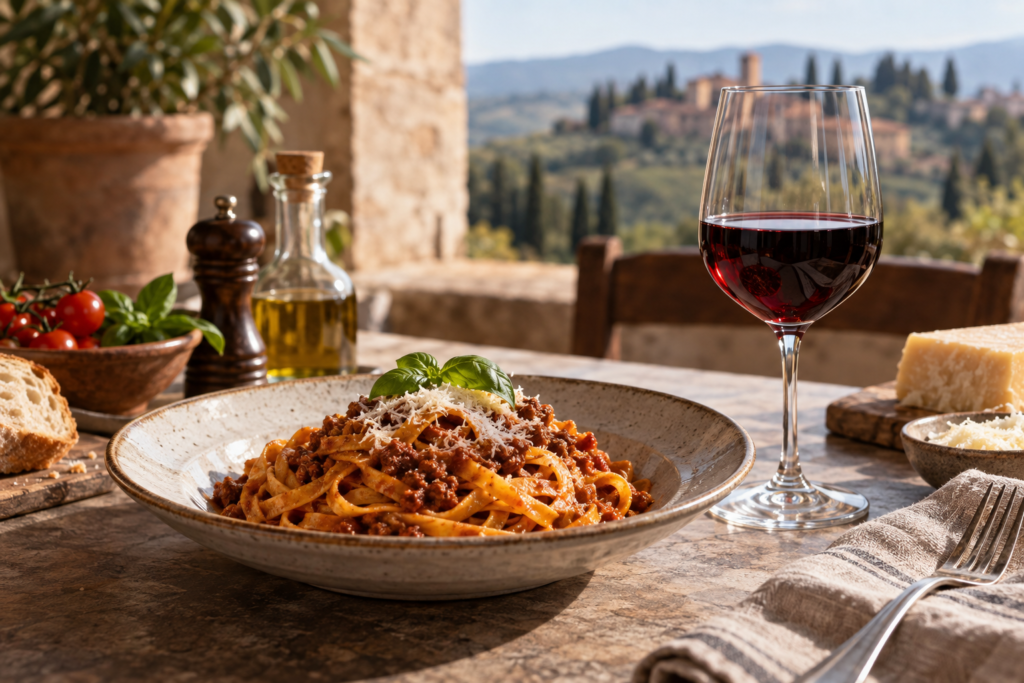
Best Wine with Bolognese and Ragù
Ragù requires a different approach.
Meat, fat, slow cooking and concentrated flavours create more intensity than a simple tomato sauce.
A wine for ragù should usually have:
- sufficient acidity;
- enough structure;
- moderate tannin;
- good savoury character.
Sangiovese and Ragù
Sangiovese is one of the most natural choices.
Its acidity can refresh the palate while its structure stands up to meat-based sauces.
Chianti and Chianti Classico are therefore strong candidates for tagliatelle al ragù and other traditional meat sauces.
Barbera and Ragù
Barbera can also work extremely well, especially when you want freshness rather than heavy tannins.
Its acidity helps balance rich meat sauces while keeping the pairing energetic.
Best Wine with Carbonara
Carbonara is rich but not tomato-based.
Egg, Pecorino Romano, guanciale and black pepper create a combination of fat, saltiness and savoury intensity.
The wine needs freshness, but also enough body not to disappear.
A structured Italian white is often more effective than a very tannic red.
Soave Classico with Carbonara
Soave Classico can be an excellent match.
Its freshness helps balance the richness of the dish while its structure can handle egg, cheese and guanciale.
The pairing remains elegant without overwhelming the pasta.
Other structured Italian whites may work as well, provided they combine acidity with sufficient body.
Best Wine with Seafood Pasta
Seafood pasta generally calls for freshness.
Shellfish, clams, prawns and delicate fish usually work best with wines that are:
- fresh;
- mineral;
- relatively light;
- not excessively oaked;
- moderate in alcohol
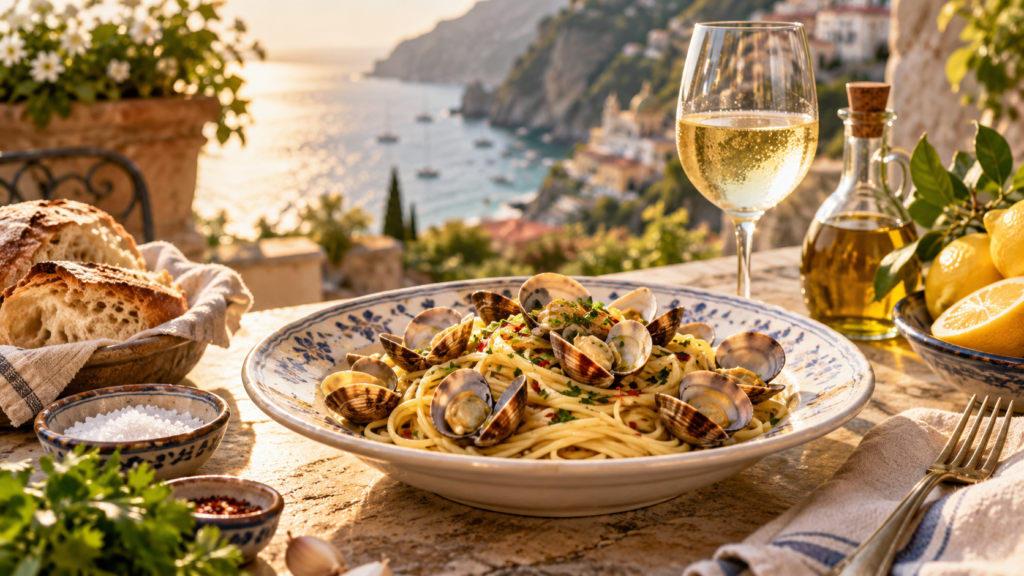
Vermentino
Vermentino is one of the most versatile Italian options for seafood pasta.
Its freshness and Mediterranean character can work particularly well with dishes involving shellfish, olive oil, herbs and lemon.
Falanghina
Falanghina is another strong candidate, especially for southern Italian seafood preparations.
Its aromatic character and freshness can complement dishes such as spaghetti alle vongole without dominating them.
What About Red Wine with Seafood Pasta?
It is possible, particularly when tomato is part of the recipe, but the red should generally be light and low in aggressive tannins.
For delicate seafood pasta without tomato, white wine remains the easier pairing.
Best Wine with Pesto Pasta
Pesto creates a distinctive challenge.
Basil, extra virgin olive oil, pine nuts, garlic and cheese produce a strongly aromatic and herbal profile.
The wine should therefore preserve freshness while complementing those green, Mediterranean notes.
Vermentino with Pesto
Vermentino is an especially natural pairing.
Its freshness and aromatic profile can echo the herbal character of pesto without overpowering it.
Regional affinity also makes the combination particularly compelling when pairing Ligurian-style pesto dishes.
Best Wine with Mushroom Pasta
Mushrooms introduce earthy and savoury flavours.
Here, the pairing can move in two directions.
A structured white wine can complement the texture and savoury depth of the dish, while an elegant red can work when the recipe is richer.
Verdicchio
A mature or structured Verdicchio can be particularly interesting with mushroom pasta.
Its acidity and complexity can match earthy flavours while maintaining freshness.
Pinot Nero
For richer mushroom preparations, Pinot Nero can also be a good option.
Its relatively delicate tannic structure makes it easier to pair than a powerful red.
Best Wine with Lasagna
Lasagna combines several elements at once:
- pasta;
- meat;
- tomato;
- béchamel;
- cheese.
That makes acidity especially important.
A very powerful or heavily oaked wine may overwhelm the dish, while a fresh medium-bodied red often creates better balance.
Barbera with Lasagna
Barbera’s acidity can cut through the richness of béchamel and meat while remaining compatible with tomato.
Sangiovese with Lasagna
Sangiovese is another natural option, particularly when tomato and meat dominate the preparation.
Its freshness helps prevent the combination from becoming too heavy.
Best Wine with Cheese-Based Pasta
Pasta based on cheese or butter usually benefits from wines with enough acidity to refresh the palate.
Examples include:
- cacio e pepe;
- four-cheese pasta;
- butter and Parmigiano pasta;
- ravioli with butter and sage.
Fresh or structured Italian whites can perform very well here.
Soave, Verdicchio and other balanced whites can provide contrast without dominating the dish.
For stronger cheese flavours, a fresh red such as Barbera may also be appropriate.
Best Wine with Truffle Pasta
Truffle changes the pairing completely.
Its intense earthy aroma requires a wine with complexity rather than simply power.
Nebbiolo-based wines are among the classic Italian choices.
Barolo with Truffle Pasta
Barolo can pair beautifully with pasta featuring truffle, especially when the dish also includes butter, egg pasta or meat.
The aromatic complexity of Nebbiolo can interact with the earthy character of truffle in a way few other wines can reproduce.
Barbaresco with Truffle Pasta
Barbaresco offers another Nebbiolo-based interpretation.
Depending on producer, vintage and age, it may offer a slightly different balance of elegance, structure and aromatic complexity.
The important point is not simply to choose the most powerful wine available, but one with enough complexity to accompany the truffle.
Red or White Wine with Pasta?
Both can work.
The sauce should decide.
Choose a red wine more often when the pasta includes:
- tomato;
- beef;
- pork;
- ragù;
- sausage;
- mushrooms;
- truffle.
Choose a white wine more often when the pasta includes:
- seafood;
- shellfish;
- butter;
- creamy sauces;
- pesto;
- delicate cheeses;
- vegetables.
These are useful starting points rather than absolute rules.
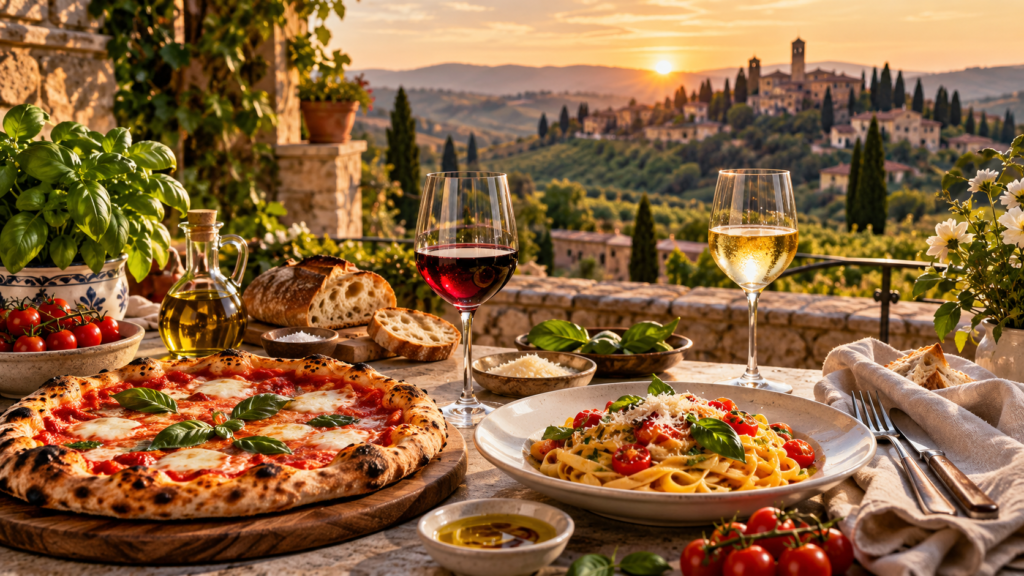
Does Pasta Always Need Italian Wine?
No.
Many wines from outside Italy can pair successfully with Italian pasta.
However, Italian wines offer an enormous advantage: many traditional styles developed within a culture in which wine was fundamentally intended for the table.
High acidity, moderate alcohol and savoury profiles are common characteristics across many Italian wine regions.
This frequently makes Italian wine particularly versatile with food.
There is also a useful traditional principle:
what grows together often goes together.
A regional Italian dish paired with a wine from the same area can therefore be an excellent place to start.
But regionality should never replace balance.
The wine still needs to work with the actual ingredients on the plate.
Common Pasta and Wine Pairing Mistakes
Choosing Wine by Pasta Shape
Spaghetti, penne or tagliatelle do not determine the pairing on their own.
Spaghetti with tomato sauce and spaghetti with clams require completely different wines.
Always begin with the sauce.
Choosing the Most Powerful Wine
More expensive or more structured does not automatically mean better.
A very concentrated wine can overwhelm a simple dish.
Ignoring Acidity
Acidity is one of the most useful tools in food and wine pairing.
It becomes particularly important with tomato, cheese, fat and rich sauces.
Pairing Delicate Seafood with Heavy Tannins
Strong tannins can clash with delicate seafood preparations.
Fresh whites are usually safer.
Forgetting the Entire Dish
Cheese, herbs, spice, meat and cooking method can completely change the pairing.
Never consider only one ingredient.
Pasta and Italian Wine: A Regional Approach
One of the most rewarding ways to explore Italian wine is through regional cuisine.
Italy’s food and wine traditions developed locally over centuries, creating numerous natural combinations.
Examples include:
- Piedmontese pasta with Nebbiolo-based wines;
- Ligurian pesto with Vermentino;
- Roman pasta dishes with wines from central Italy;
- seafood pasta with coastal Italian whites;
- Tuscan meat sauces with Sangiovese.
These combinations are not rigid rules.
They are starting points for understanding the relationship between territory, cuisine and wine.
Frequently Asked Questions
What is the best wine to drink with pasta?
There is no single best wine for pasta. The sauce and ingredients matter more than the pasta itself. Tomato and meat sauces often work well with fresh Italian reds, while seafood, pesto and creamy preparations frequently work better with white wines.
What red wine goes best with pasta?
Barbera and Sangiovese are two of the most versatile Italian red grapes for pasta. The best choice depends on the sauce, particularly its acidity, richness and meat content.
What white wine goes best with pasta?
Vermentino, Soave, Falanghina and Verdicchio can all work very well, depending on the recipe. Seafood and pesto often favour fresher whites, while richer pasta may require a more structured white.
What wine goes with spaghetti?
The sauce determines the pairing. Spaghetti al pomodoro can work with Barbera or Sangiovese, while spaghetti alle vongole generally pairs better with a fresh Italian white such as Falanghina or Vermentino.
What wine goes with pasta and tomato sauce?
Fresh reds with good acidity are generally the safest choice. Barbera and Sangiovese are two classic Italian options.
What wine goes with creamy pasta?
Choose a wine with enough acidity to cut through the richness. Structured Italian whites such as Soave can be excellent starting points.
The Essential Rule

Finding the best wine with pasta becomes much easier once you stop thinking of pasta as a single category.
A tomato sauce, seafood sauce, pesto, carbonara and meat ragù may all be served with pasta, but from a wine perspective they are completely different dishes.
Start with the dominant ingredient.
Evaluate acidity, richness and intensity.
Then choose a wine that creates balance rather than competition.
That principle is at the heart of Italian food and wine pairing.
For a broader overview of Italian cuisine and wine, explore our Italian Wine and Food Pairing Guide in the DOMINA Journal.