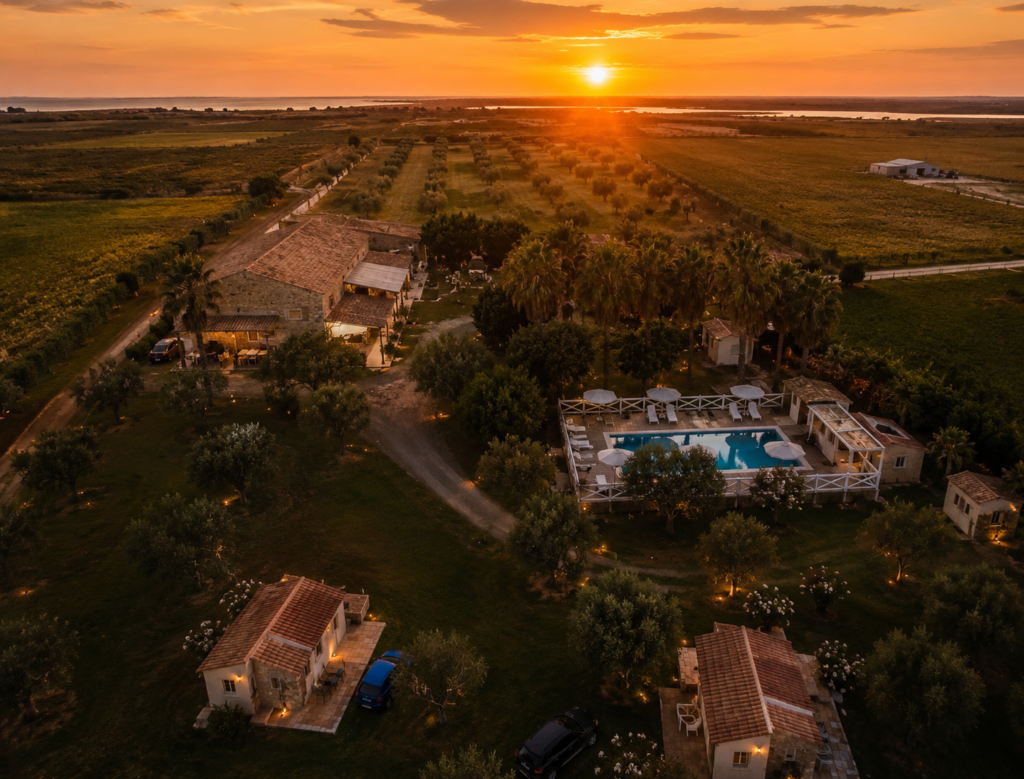
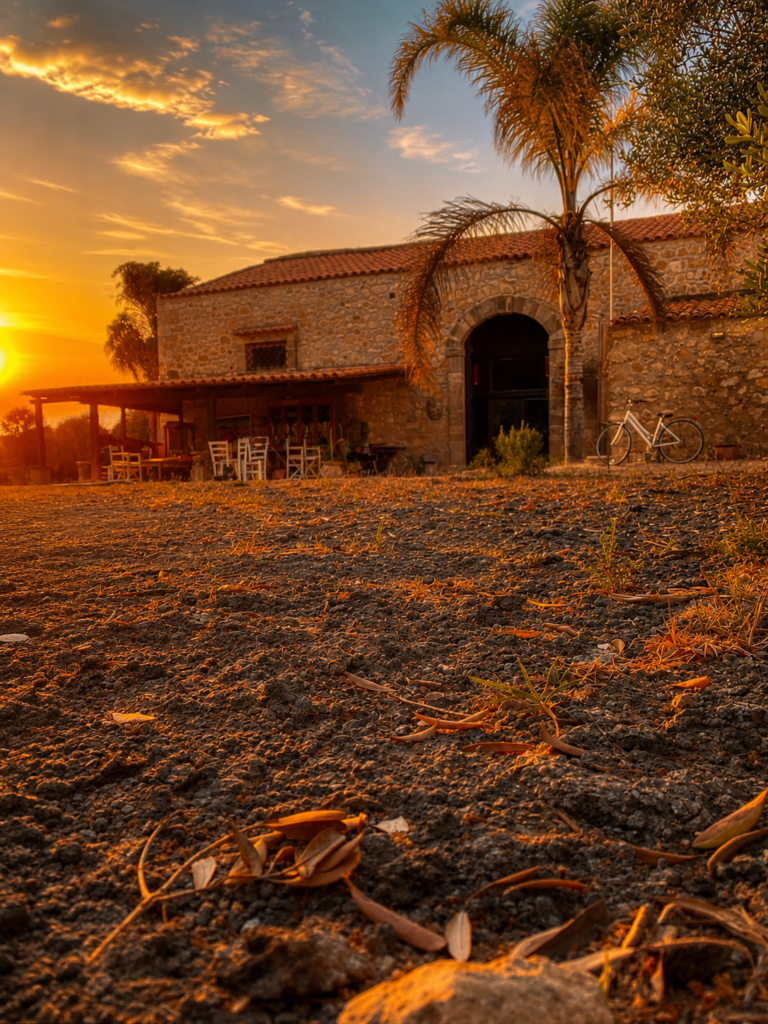
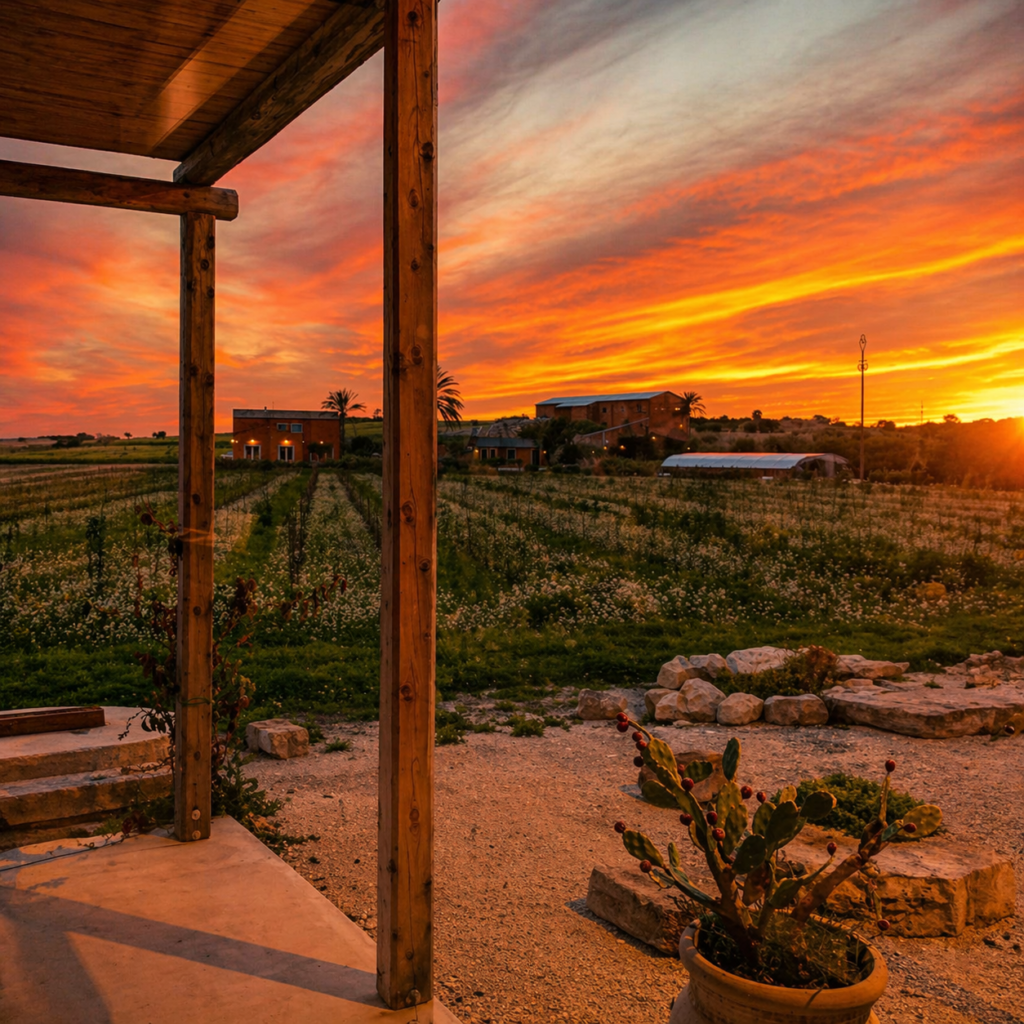
The Lost Palmenti and Forgotten Casali of Southern Sicily (1850–1950)
There are places that history records, and places that history forgets. Between Pachino, Granelli, Marzamemi and the windswept southern coast of Sicily lies a landscape that belongs to the second category.
Today, travelers see abandoned walls, roofless farmhouses, and mysterious stone structures swallowed by wild figs and prickly pears. Most pass by without asking a question.
Yet a century ago these ruins were the beating heart of a hidden kingdom.
The Houses That Once Fed the Sea

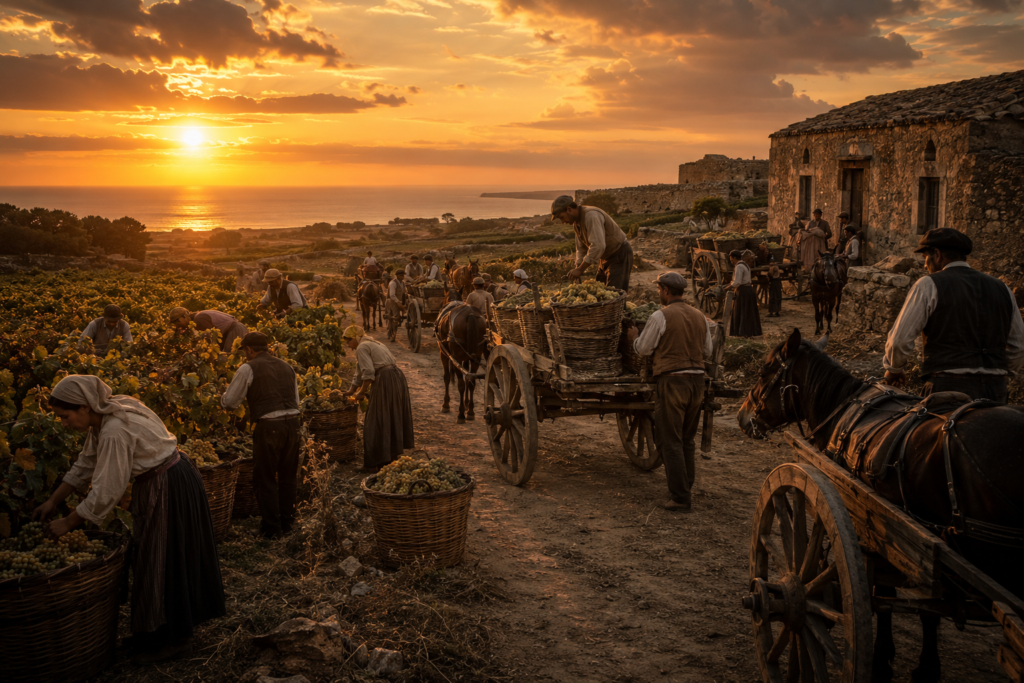
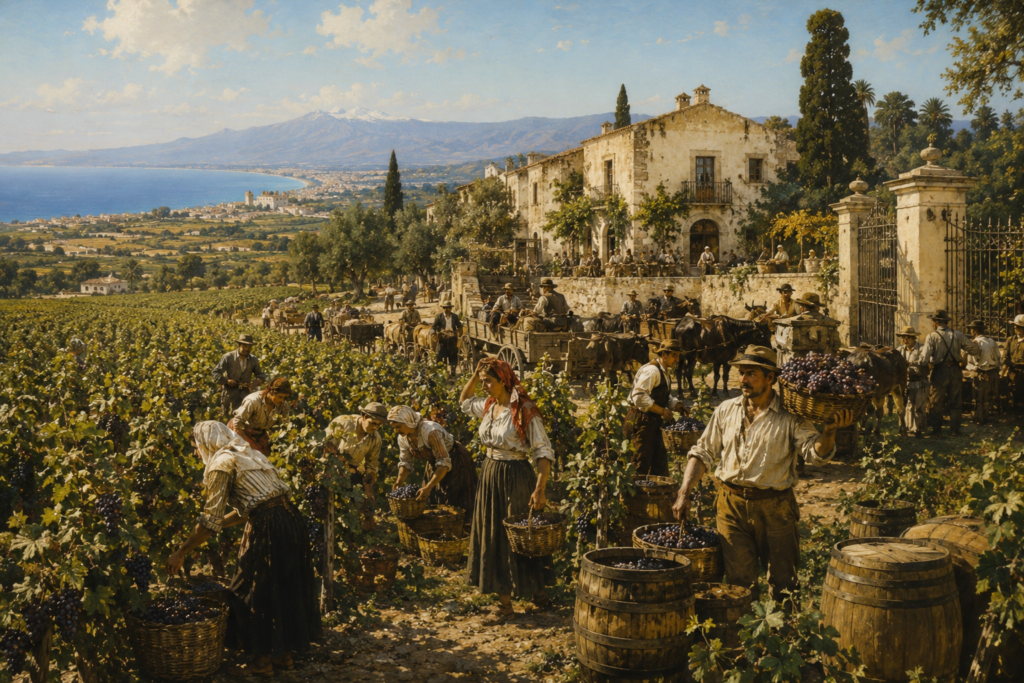
Imagine standing on a warm September evening in 1895.
The sea is visible on the horizon, glowing gold beneath the setting sun.
Around you stretch endless vineyards, olive groves and fields of wheat.
A horse cart rattles across a dusty road carrying baskets overflowing with grapes.
The scent of fermenting wine fills the air.
In the distance rises a building unlike any modern home.
Thick limestone walls.
Tiny windows.
An enormous courtyard.
A deep underground cistern.
And beside it, a mysterious structure carved into stone.
The palmento.
For generations, these buildings were the economic engines of southeastern Sicily.
The Secret Factories of the Countryside

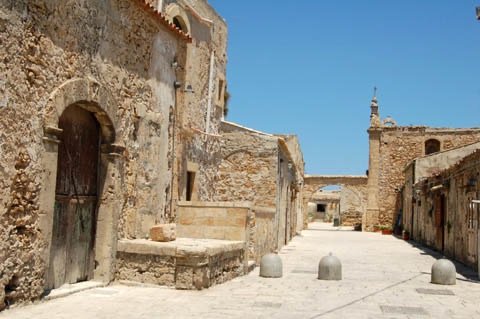
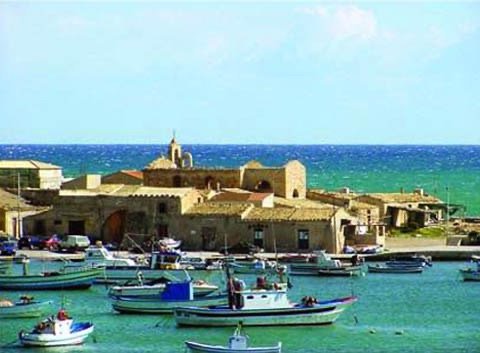
Marzamemi, the Ancient Seaside Fishing VillageMarzamemi Antico Borgo Marinaro
To the untrained eye, a palmento appears almost primitive.
But appearances deceive.
These were sophisticated agricultural machines.
Here grapes were crushed beneath human feet.
The juice flowed through channels carved directly into the rock.
Fermentation began naturally in massive stone vats.
Every harvest transformed these silent buildings into centers of extraordinary activity.
Families worked through the night.
Lanterns flickered in the darkness.
Voices echoed among the stone walls.
And barrels of wine began a journey that would eventually reach ports throughout the Mediterranean.
Why Here?
The question is irresistible.
Why did these agricultural empires emerge in such an isolated corner of Sicily?
The answer lies in a remarkable combination of geography.
The land around Pachino possesses:
- fertile limestone soils,
- abundant sunlight,
- sea breezes that protect vines,
- mild winters,
- access to nearby ports such as Marzamemi and Portopalo.
Few places in Europe offered such perfect conditions.
Nature itself had created an agricultural paradise.
The people merely learned how to exploit it.
The Mystery Beneath the Ruins
Yet the greatest fascination begins when the workers disappear.
Walk through these abandoned estates today.
Something feels strangely unfinished.
Many contain hidden rooms.
Some have blocked passages.
Others possess underground chambers whose original purpose remains uncertain.
Old local stories speak of secret storage spaces, forgotten wine reserves, hidden valuables, and underground shelters used during times of unrest.
Most of these tales can never be fully verified.
And that uncertainty is precisely what makes them irresistible.
Every ruined doorway seems to conceal a secret.
Every collapsed roof feels like a chapter torn from an unfinished novel.
The Men Who Built an Invisible Empire
The owners of these estates were not kings.
Yet in many ways they ruled their own kingdoms.
A successful landowner could control:
- hundreds of acres of vineyards,
- olive groves,
- grain fields,
- livestock,
- workers’ houses,
- water systems,
- wine production facilities.
Their wealth flowed not from palaces but from soil.
Their fortunes depended on rain, harvests and ships.
When the harvest was good, prosperity spread throughout entire communities.
When it failed, hardship followed.
The rhythm of life was measured not by clocks but by seasons.
The Silence After the Storm
Then came the twentieth century.
Industrialization.
Changing markets.
Migration.
Wars.
Modern agriculture.
Slowly the old system began to fade.
Families left the countryside.
Palmenti fell silent.
Stone walls cracked.
Roofs collapsed.
Nature reclaimed what humans had built.
What remains today are ghosts of prosperity.
Yet they are not dead.
They are waiting.
Waiting for someone to ask the right questions.

A Landscape of Forgotten Dreams
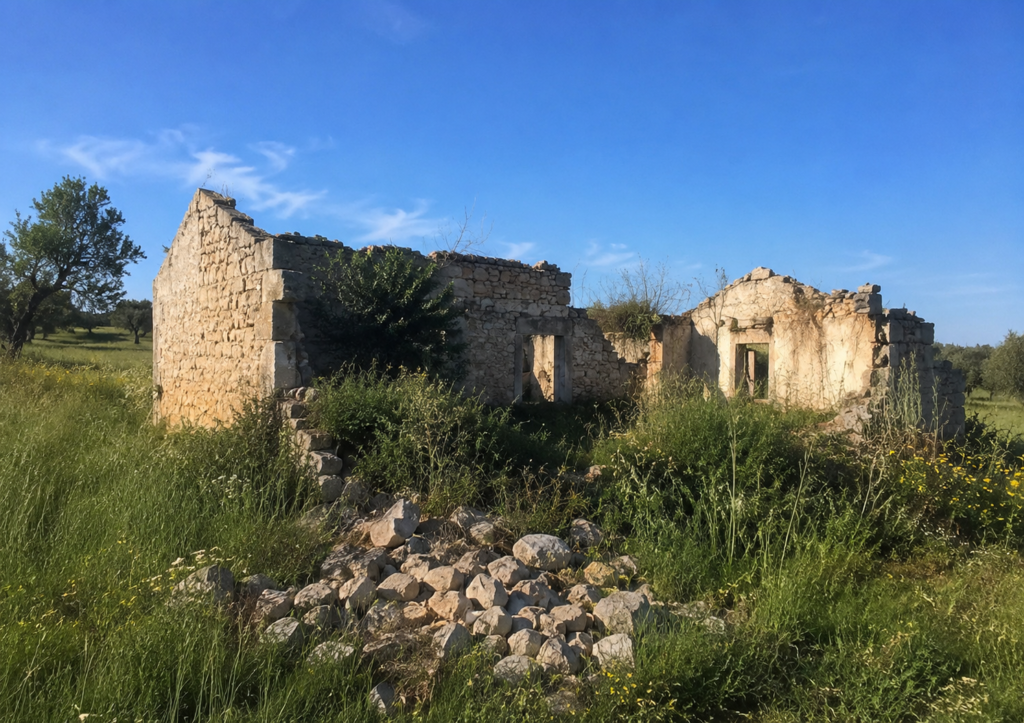

The abandoned palmenti and casali of the Pachino and Granelli region are far more than ruins.
They are monuments to ambition.
To resilience.
To generations who transformed harsh land into wealth.
They remind us that beneath every fallen stone lies a human story.
And perhaps that is their greatest mystery.
Not what is hidden underground.
But what has been forgotten above it.
And that moment, in truth, has already arrived.

Today, from every corner of the world, more and more people are returning to these lands with fresh eyes. They are not simply searching for a house by the sea; they are searching for something far rarer — an authentic story to become part of.
In an age where everything seems to be growing faster, more standardized, and increasingly alike, the charm of these ancient casali and palmenti has never felt more powerful.
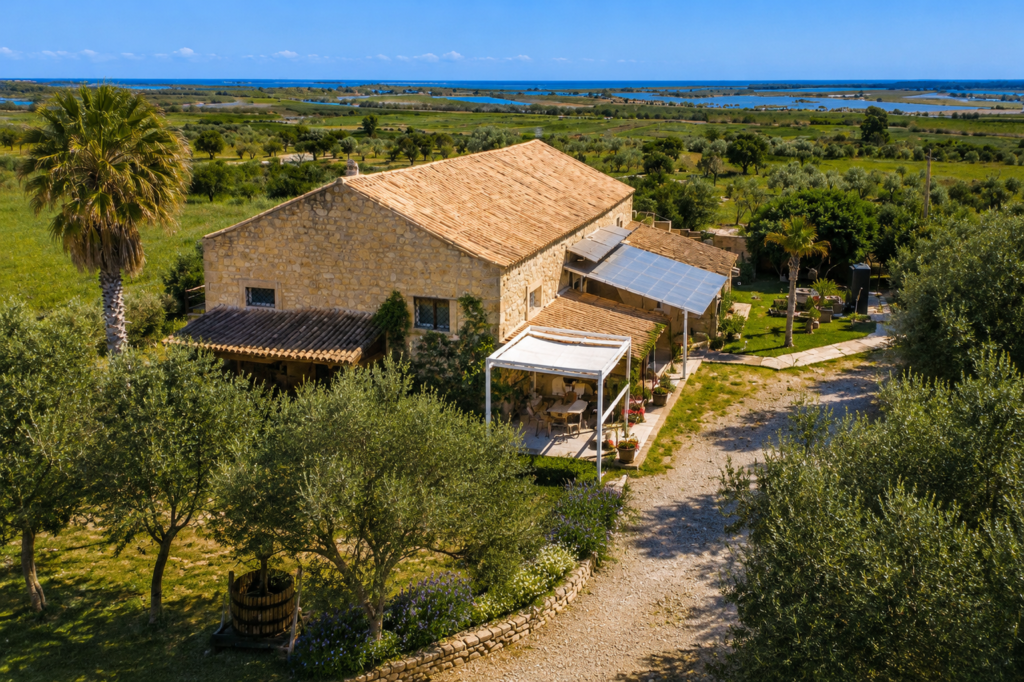
The old stones are beginning to speak again.
The ancient cisterns are being uncovered and restored.
Dry-stone walls are rebuilt using the same techniques passed down through generations.
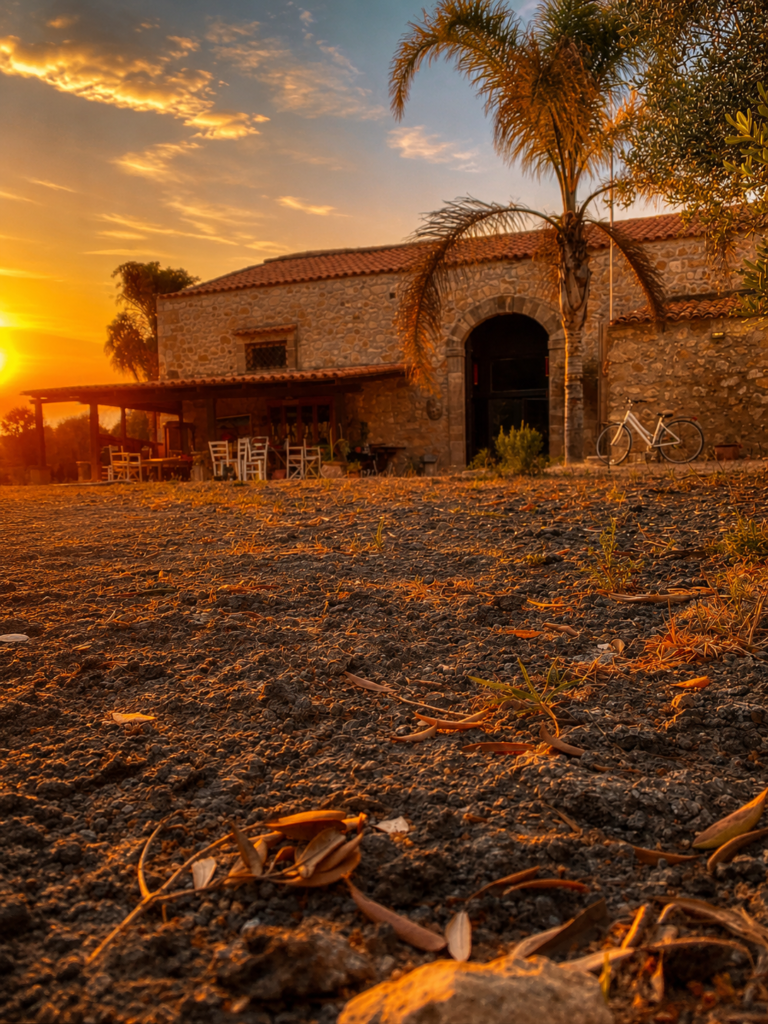
Courtyards once abandoned are filling with life once more.
What for decades was dismissed as a ruin is now being recognized for what it has always been: a heritage of immeasurable value.
Many of these buildings are experiencing a remarkable rebirth, thanks to men and women who have chosen to invest not only money, but passion, respect, and vision.
They are not searching for artificial luxury.
They are searching for the soul of a place.
They seek the scent of the earth after rain.
The silence of moonlit countryside.
The slow rhythm of the seasons.
The imperfect beauty of authenticity.
And so, where wine once flowed toward the markets of the Mediterranean, a new chapter is unfolding. Historic farmhouses are becoming elegant homes, sustainable agricultural estates, boutique retreats, organic vineyards, and restoration projects that blend tradition with innovation.
This is about far more than restoring buildings.
It is about restoring dignity to a collective memory.
Protecting an identity.
Passing on a legacy that once seemed destined to disappear.
The world is beginning to rediscover that true wealth cannot be measured only in square meters or property values.
Its value is found in the stories a place is capable of holding.
And few places on earth possess stories as deep and compelling as those hidden among the vineyards, olive groves, and wind-swept shores of southeastern Sicily.
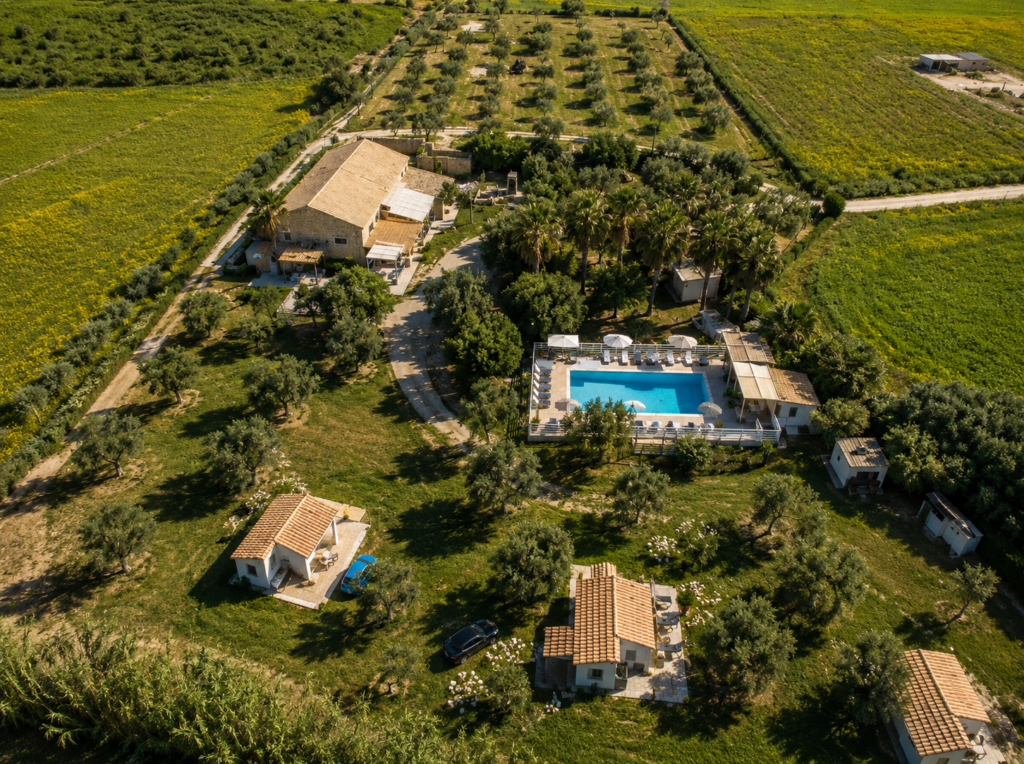
Perhaps that is why those who arrive here rarely remain mere visitors.
They become part of the story.
Guardians of a tradition.
Participants in a new renaissance.
Because the future of these casali does not lie in becoming something different.
Their greatest strength lies in remaining true to what they have always been.
Places of work.
Places of family.
Places of memory and belonging.
Places where the land meets the sea.
Where the past is not a burden to be forgotten, but a foundation from which new dreams can grow.
And as the sun continues to set over the fields of Pachino, the dunes of Granelli, and the golden stones of Marzamemi, the old silent kingdom continues its slow awakening.
Not as a museum.
Not as a postcard.
But as a living testament to what can happen when history, nature, and human passion choose to walk forward together once again.